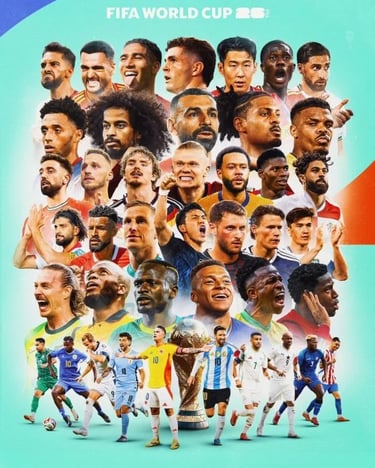
2026 World Cup
2026 World Cup Products
2026 World Cup Complete Schedule
2026 World Cup Complete Schedule: Dates, Matches & Key Fixtures
The 2026 FIFA World Cup promises to be the biggest tournament in football history, featuring 48 teams across three host nations—United States, Canada, and Mexico. With a record 104 matches, fans worldwide are eager to know the complete schedule for the tournament.
This guide provides the full 2026 World Cup schedule, including the group stage, knockout rounds, and the final.
2026 World Cup Dates Overview
Opening Match: Early June 2026
Group Stage: Early to late June 2026
Round of 32: Late June 2026 (new stage due to 48 teams)
Round of 16: Early July 2026
Quarterfinals: Early July 2026
Semifinals: Mid-July 2026
Third Place Match: Mid-July 2026
Final: Mid-July 2026 in the United States
The tournament spans approximately 5–6 weeks, providing a packed schedule of exciting matches.
Group Stage Schedule
Format: 12 groups of 4 teams
Matches per team: 3
Advancement: Top 2 teams from each group plus 8 best third-placed teams
Key Dates: Early June – Late June
The group stage will feature more matches than ever, giving fans numerous opportunities to follow their favorite teams.
Knockout Stage Schedule
The knockout rounds include:
Round of 32 – Late June 2026
Round of 16 – Early July 2026
Quarterfinals – Early July 2026
Semifinals – Mid-July 2026
Third Place Match – Mid-July 2026
Final – Mid-July 2026
Matches tied after 90 minutes will proceed to extra time and penalty shootouts if necessary.
Host Countries and Stadiums
United States: 11 stadiums including MetLife Stadium, SoFi Stadium
Canada: 2 stadiums including BMO Field
Mexico: 3 stadiums including Estadio Azteca
Fans should check local times and stadium locations, as matches span multiple time zones across North America.
Why the Complete Schedule Is Important
Planning: Fans attending the matches can book tickets and travel accordingly
Broadcasting: TV networks and streaming services can schedule coverage
Analysis: Analysts can track key fixtures and predict group-stage outcomes
Fan Engagement: Allows global audiences to follow favorite teams and matches
When Will the Official Schedule Be Released?
FIFA typically releases the official match schedule about one year before the tournament, confirming:
Match dates and kick-off times
Stadium assignments
Group pairings
Expect the official 2026 World Cup schedule to be announced in 2025.
Final Thoughts
The 2026 World Cup complete schedule will guide fans through the most extensive and exciting World Cup ever. With 48 teams, 104 matches, and three host countries, football fans can expect a festival of action, drama, and unforgettable moments from June to July 2026.
Keeping track of the schedule is essential to experience every key fixture, knockout match, and the grand final.
2026 World Cup Group Stage Schedule
2026 World Cup Group Stage Schedule: Complete Fixtures and Dates
The 2026 FIFA World Cup is set to be the largest tournament in football history, featuring 48 teams across three host countries—United States, Canada, and Mexico. With an expanded group stage, fans around the world are eager to see the full 2026 World Cup group stage schedule.
This guide provides an overview of all group-stage fixtures, dates, and key matches to watch.
Format of the Group Stage
48 Teams: Divided into 12 groups of 4 teams each
Matches per Team: 3
Advancement: Top 2 teams from each group, plus 8 best third-placed teams advance to the Round of 32
Match Dates: Early June – Late June 2026
The expanded format guarantees more matches and more opportunities for teams to compete in the tournament’s first stage.
Key Dates of the Group Stage
Opening Match: Early June 2026, hosted in the United States
Group Stage Matches: Spread over 2–3 weeks
Final Group Matches: Late June 2026, determining teams advancing to the Round of 32
Matches will take place across 16 stadiums in three countries, requiring fans to track local times and stadium locations.
Sample Group Stage Schedule
While FIFA will release the official matchups and kick-off times closer to the tournament, a general outline is as follows:
GroupMatchesApproximate DatesGroup A6 matchesEarly JuneGroup B6 matchesEarly June………Group L6 matchesLate June
Each team plays 3 matches, facing every other team in its group once. Top performers advance, while lower-ranked teams are eliminated.
Host Cities and Stadiums for Group Stage
United States (11 Stadiums)
MetLife Stadium
SoFi Stadium
AT&T Stadium
… and others
Canada (2 Stadiums)
BMO Field
BC Place
Mexico (3 Stadiums)
Estadio Azteca
Estadio Akron
Estadio BBVA
Fans should consider time zones when planning to watch live matches.
Why the Group Stage Schedule Is Important
Planning Attendance: Fans traveling to matches can schedule tickets and travel
Broadcasting: Networks can plan coverage for key group-stage fixtures
Analysis: Helps fans and analysts predict which teams might advance
Fan Engagement: Encourages early discussions and match-day celebrations
Tips for Following the Group Stage
Check official FIFA channels for confirmed fixtures
Track time zone differences between the U.S., Canada, and Mexico
Follow team news and player form to anticipate key match outcomes
Use apps or schedules to mark must-watch matches for each group
Final Thoughts
The 2026 World Cup group stage schedule promises an unprecedented amount of football action with 48 teams and 12 groups. Fans should pay attention to match dates, stadium locations, and team performance to fully enjoy the early stages of this historic tournament.
The group stage sets the tone for the knockout rounds, making every match crucial in the quest for the 2026 FIFA World Cup trophy.
2026 World Cup Match Results Update: Latest Scores, Highlights & Tournament Progress
The 2026 FIFA World Cup is set to be the biggest edition in history, featuring 48 teams competing across three host nations—United States, Canada, and Mexico. As the tournament unfolds, fans around the world are searching for the latest match results updates, highlights, and standings.
This guide provides a structured overview of how to follow 2026 World Cup match results, what to expect, and how updates will be delivered in real time.
Where to Find 2026 World Cup Match Results
Fans will be able to track live results and updates through multiple official and digital channels:
FIFA official website and app
Live sports broadcasters worldwide
Sports news platforms and mobile apps
Social media updates from official team accounts
These platforms will provide real-time scores, goal updates, and match statistics.
How Match Results Will Be Updated
During the tournament, match results will be updated instantly with:
Final scorelines after full-time
Extra time and penalty shootout outcomes
Goal scorers and assist details
Match statistics (possession, shots, fouls)
Group standings and qualification updates
Updates will be available within seconds of key match events.
Group Stage Results Update
The group stage will feature:
12 groups of 4 teams
Each team plays 3 matches
Top 2 teams plus 8 best third-placed teams advance
What to expect in results updates:
Daily score updates across all groups
Live group standings after every match
Early qualification confirmations for knockout rounds
The group stage will generate the most frequent match results updates due to the high number of games.
Knockout Stage Results Update
Once the tournament reaches the knockout stage, updates become even more intense:
Round of 32 results – first elimination round
Round of 16 results – top 16 teams compete
Quarterfinal results – elite 8 teams remain
Semifinal results – determine finalists
Final result – crown the World Champion
Every match is do-or-die, making results updates highly dramatic and widely followed.
Key Features of Match Results Coverage
Modern 2026 World Cup match results updates will include:
1. Live Score Tracking
Real-time updates of goals and match events
2. Video Highlights
Key moments such as goals, saves, and penalties
3. Advanced Statistics
Expected goals (xG)
Possession percentages
Passing accuracy
4. Standings & Qualification Scenarios
Automatic updates of group rankings and knockout qualifications
Why Match Results Updates Matter
Fans can follow matches in real time worldwide
Analysts can evaluate team performance instantly
Media outlets can report breaking sports news faster
Fantasy football and betting platforms rely on real-time data
With a global audience, fast and accurate updates are essential for engagement.
Host Nations and Match Coverage
The tournament will be hosted across:
United States
Canada
Mexico
Matches will be played in multiple cities and time zones, making live updates even more important for global viewers.
When Will Updates Be Most Frequent?
Match results updates will be most active during:
Group stage (multiple matches daily)
Round of 32 and Round of 16 (high elimination intensity)
Quarterfinals to Final (global peak attention)
Final Thoughts
The 2026 World Cup match results update will be one of the most followed sports content streams in the world. With 104 matches across three countries, fans will rely heavily on real-time updates to stay connected to the action.
From group stage surprises to knockout drama, every result will shape the path toward crowning the next FIFA World Champion.
Detailed Explanation of the 2026 World Cup Rules
Detailed Explanation of the 2026 World Cup Rules: Complete Guide for Fans
The 2026 FIFA World Cup will be the biggest tournament in football history, featuring 48 teams and matches hosted across three countries—United States, Canada, and Mexico. With a redesigned structure and expanded format, the rules of the 2026 World Cup have also evolved to accommodate more teams, more matches, and a more complex competition system.
This article provides a detailed explanation of the 2026 World Cup rules, including tournament format, group stage rules, knockout regulations, and tie-breaking systems.
1. Tournament Format Overview (48 Teams System)
The biggest change in the 2026 World Cup rules is the expansion from 32 to 48 teams.
Key structure:
48 national teams participate
Divided into 12 groups of 4 teams
Total of 104 matches
Tournament lasts about 5–6 weeks
Advancement system:
Top 2 teams per group automatically qualify
8 best third-placed teams also advance
Total 32 teams enter knockout stage
This new format introduces a Round of 32, which did not exist in previous World Cups.
2. Group Stage Rules Explained
The group stage is the first phase of the tournament.
Points system:
Win = 3 points
Draw = 1 point
Loss = 0 points
Match structure:
Each team plays 3 matches
Teams face every other team in their group once
Ranking criteria (if tied on points):
Goal difference
Goals scored
Head-to-head results
Fair play points (yellow/red cards)
Drawing of lots (final method)
The group stage rules ensure fairness while rewarding attacking performance.
3. Knockout Stage Rules
Once teams qualify, the tournament becomes single elimination.
Knockout rounds:
Round of 32 (new for 2026)
Round of 16
Quarterfinals
Semifinals
Final
Match rules:
90 minutes regular time
If tied: 30 minutes extra time (2 halves of 15 minutes)
If still tied: penalty shootout
There are no second chances in knockout matches—every game is decisive.
4. Substitution Rules
The 2026 World Cup will follow modern FIFA substitution regulations:
Up to 5 substitutions per match
Substitutions allowed in 3 stoppages (plus halftime)
Additional substitution permitted in extra time
Concussion substitutions may apply if approved by FIFA
These rules help manage player fatigue due to the expanded tournament.
5. VAR and Technology Rules
Technology plays a major role in enforcing fairness.
Key systems include:
VAR (Video Assistant Referee) for penalties, goals, red cards
Goal-line technology to confirm goals
Semi-automated offside detection for faster decisions
These systems reduce human error and improve match accuracy.
6. Discipline and Fair Play Rules
Player behavior is strictly regulated:
Yellow cards accumulate across matches
Two yellow cards = suspension for next match
Straight red card = immediate suspension (may increase depending on severity)
Fair play points used in group rankings
Discipline can directly affect qualification outcomes.
7. Extra Time and Penalty Rules
In knockout stages:
Extra time consists of two 15-minute halves
Teams cannot “carry over” goals or advantages
Penalty shootouts decide tied matches after extra time
Penalty rules follow standard FIFA format (best of five kicks, then sudden death).
8. Squad and Player Eligibility Rules
Each national team must follow FIFA squad regulations:
Maximum squad size: 23–26 players (final number confirmed closer to tournament)
Players must be eligible under FIFA nationality rules
Injury replacements allowed only under specific conditions before tournament starts
9. Hosting Rules and Match Distribution
The tournament is distributed across:
United States (majority of matches, including final)
Canada
Mexico
Each country hosts matches in multiple cities, meaning teams must travel across different time zones and climates.
10. Why the 2026 World Cup Rules Matter
The updated rules are designed to:
Increase global participation
Make the tournament more inclusive
Add more knockout excitement (Round of 32)
Improve fairness through technology
Provide more matches for fans worldwide
However, the expansion also introduces challenges such as player fatigue and tighter scheduling.
Final Thoughts
The 2026 World Cup rules represent the most significant evolution in FIFA tournament history. With a 48-team format, expanded knockout rounds, advanced technology, and refined tie-breaking systems, the competition will be more dynamic and global than ever before.
Understanding these rules helps fans better follow the tournament, analyze matches, and enjoy every stage of the World Cup experience.
2026 World Cup Top Scorer Predictions
Detailed Explanation of the 2026 World Cup Rules: Complete Guide for Fans
The 2026 FIFA World Cup will be the biggest tournament in football history, featuring 48 teams and matches hosted across three countries—United States, Canada, and Mexico. With a redesigned structure and expanded format, the rules of the 2026 World Cup have also evolved to accommodate more teams, more matches, and a more complex competition system.
This article provides a detailed explanation of the 2026 World Cup rules, including tournament format, group stage rules, knockout regulations, and tie-breaking systems.
1. Tournament Format Overview (48 Teams System)
The biggest change in the 2026 World Cup rules is the expansion from 32 to 48 teams.
Key structure:
48 national teams participate
Divided into 12 groups of 4 teams
Total of 104 matches
Tournament lasts about 5–6 weeks
Advancement system:
Top 2 teams per group automatically qualify
8 best third-placed teams also advance
Total 32 teams enter knockout stage
This new format introduces a Round of 32, which did not exist in previous World Cups.
2. Group Stage Rules Explained
The group stage is the first phase of the tournament.
Points system:
Win = 3 points
Draw = 1 point
Loss = 0 points
Match structure:
Each team plays 3 matches
Teams face every other team in their group once
Ranking criteria (if tied on points):
Goal difference
Goals scored
Head-to-head results
Fair play points (yellow/red cards)
Drawing of lots (final method)
The group stage rules ensure fairness while rewarding attacking performance.
3. Knockout Stage Rules
Once teams qualify, the tournament becomes single elimination.
Knockout rounds:
Round of 32 (new for 2026)
Round of 16
Quarterfinals
Semifinals
Final
Match rules:
90 minutes regular time
If tied: 30 minutes extra time (2 halves of 15 minutes)
If still tied: penalty shootout
There are no second chances in knockout matches—every game is decisive.
4. Substitution Rules
The 2026 World Cup will follow modern FIFA substitution regulations:
Up to 5 substitutions per match
Substitutions allowed in 3 stoppages (plus halftime)
Additional substitution permitted in extra time
Concussion substitutions may apply if approved by FIFA
These rules help manage player fatigue due to the expanded tournament.
5. VAR and Technology Rules
Technology plays a major role in enforcing fairness.
Key systems include:
VAR (Video Assistant Referee) for penalties, goals, red cards
Goal-line technology to confirm goals
Semi-automated offside detection for faster decisions
These systems reduce human error and improve match accuracy.
6. Discipline and Fair Play Rules
Player behavior is strictly regulated:
Yellow cards accumulate across matches
Two yellow cards = suspension for next match
Straight red card = immediate suspension (may increase depending on severity)
Fair play points used in group rankings
Discipline can directly affect qualification outcomes.
7. Extra Time and Penalty Rules
In knockout stages:
Extra time consists of two 15-minute halves
Teams cannot “carry over” goals or advantages
Penalty shootouts decide tied matches after extra time
Penalty rules follow standard FIFA format (best of five kicks, then sudden death).
8. Squad and Player Eligibility Rules
Each national team must follow FIFA squad regulations:
Maximum squad size: 23–26 players (final number confirmed closer to tournament)
Players must be eligible under FIFA nationality rules
Injury replacements allowed only under specific conditions before tournament starts
9. Hosting Rules and Match Distribution
The tournament is distributed across:
United States (majority of matches, including final)
Canada
Mexico
Each country hosts matches in multiple cities, meaning teams must travel across different time zones and climates.
10. Why the 2026 World Cup Rules Matter
The updated rules are designed to:
Increase global participation
Make the tournament more inclusive
Add more knockout excitement (Round of 32)
Improve fairness through technology
Provide more matches for fans worldwide
However, the expansion also introduces challenges such as player fatigue and tighter scheduling.
Final Thoughts
The 2026 World Cup rules represent the most significant evolution in FIFA tournament history. With a 48-team format, expanded knockout rounds, advanced technology, and refined tie-breaking systems, the competition will be more dynamic and global than ever before.
Understanding these rules helps fans better follow the tournament, analyze matches, and enjoy every stage of the World Cup experience.